Map a window before filling it
A small observation sheet can tell you more about a growing spot than the word ‘bright’ on its own.
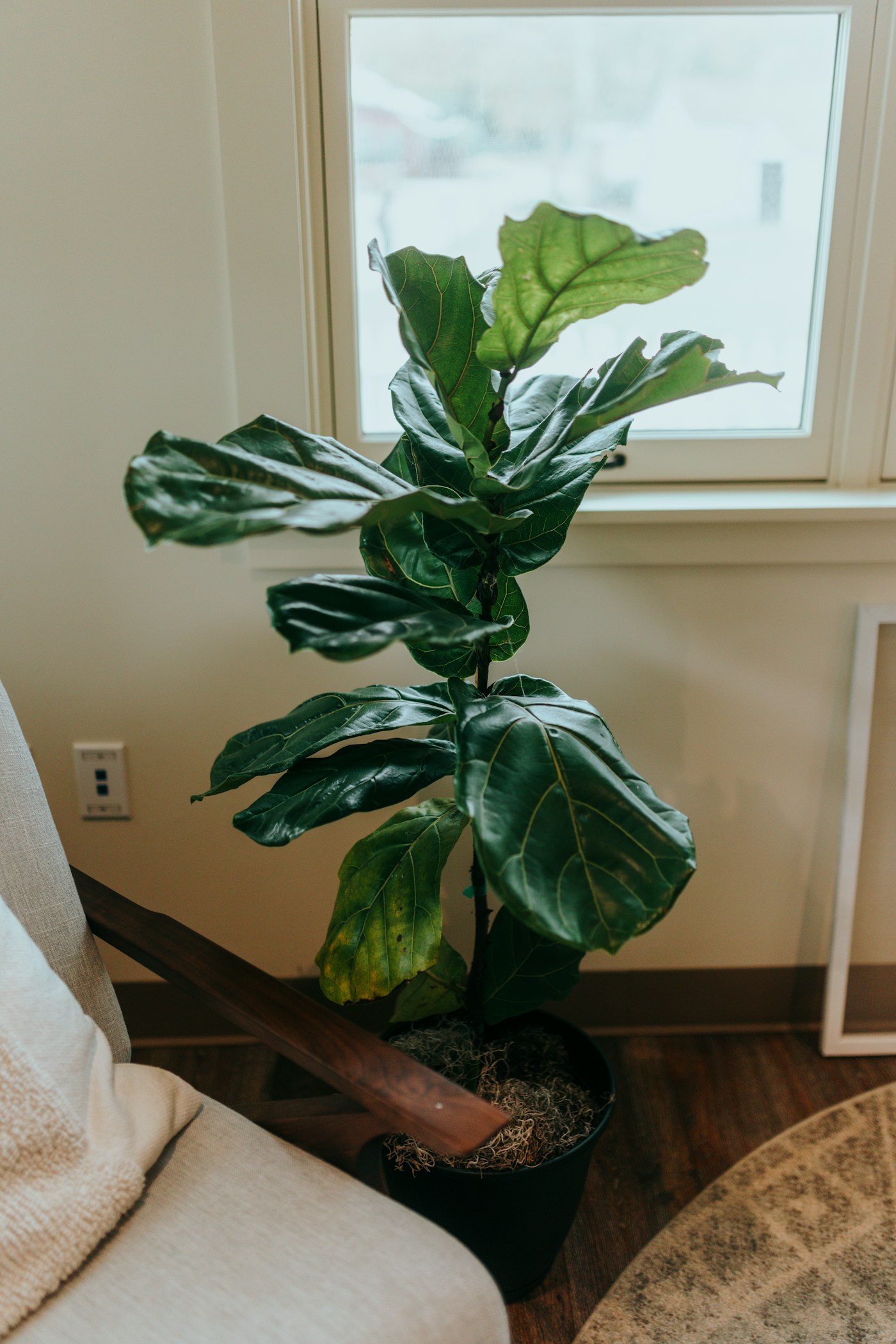
A windowsill looks like a single growing place until you watch it for a day. The corner behind a curtain, the ledge beside the glass and the shelf across the room can receive very different light. Before arranging a collection, make a short record of the actual space. This is an observation exercise, not a substitute for identifying a plant and checking its particular needs.
Draw the space you really have
Sketch the window and the nearest wall on one page. Mark curtains, a deep frame, an overhang and any building or tree that blocks the view outside. Add the available surfaces, including their distance from the glass. There is no need for an attractive drawing. A rectangle labelled ‘shelf, behind curtain’ is more useful than a beautiful sketch with no measurements.
Now choose three moments when you are normally at home, perhaps breakfast, lunch and late afternoon. On a reasonably clear day, record whether a patch of direct sun reaches each surface. Keep cloud cover in the notes. Repeat on another day rather than treating one cloudy afternoon as a complete description of the window. If you cannot observe at midday, leave that cell blank instead of guessing.
Separate a description from a conclusion
‘Sun touched the back half of the shelf at 10:30’ is an observation. ‘This is a high-light shelf’ is an interpretation. Keeping those statements apart makes the page easier to revise. A phone photograph taken from the same doorway can help you compare the shadow pattern, but automatic exposure means that a bright-looking photograph is not a reliable measurement of light available to a plant.
Iowa State University Extension identifies light as one of several environmental conditions that shape indoor plant care. Its guidance also distinguishes plant groups by light requirements. Use a species-specific reference to connect your observations to a particular plant; do not assume that every ornamental plant wants the same position. The purpose of the map is to improve that conversation, not to produce a universal rating.
Give each position a name
Use practical labels such as W1 for the left sill and S1 for the lower shelf. Put the same label in your plant journal when a pot changes position. A note saying ‘moved to W1’ is easier to compare later than ‘moved somewhere brighter’. Record the move date, keep an earlier photograph and describe what prompted the change. Avoid moving several plants repeatedly just to make the display look balanced.
Return to the map when the season changes, a tree gains leaves or curtains change. You do not need a daily drawing forever. The finished page should answer a modest question: what do you know about this spot, and what still needs checking? A few honest gaps are more helpful than a confident label built from an impression.
Further reading: Iowa State University Extension: How to Care for Houseplants. The mapping worksheet above is an editorial observation method.